
5 March 2026 · 4 min read
Power Flushing Explained: Signs Your Heating System Needs One
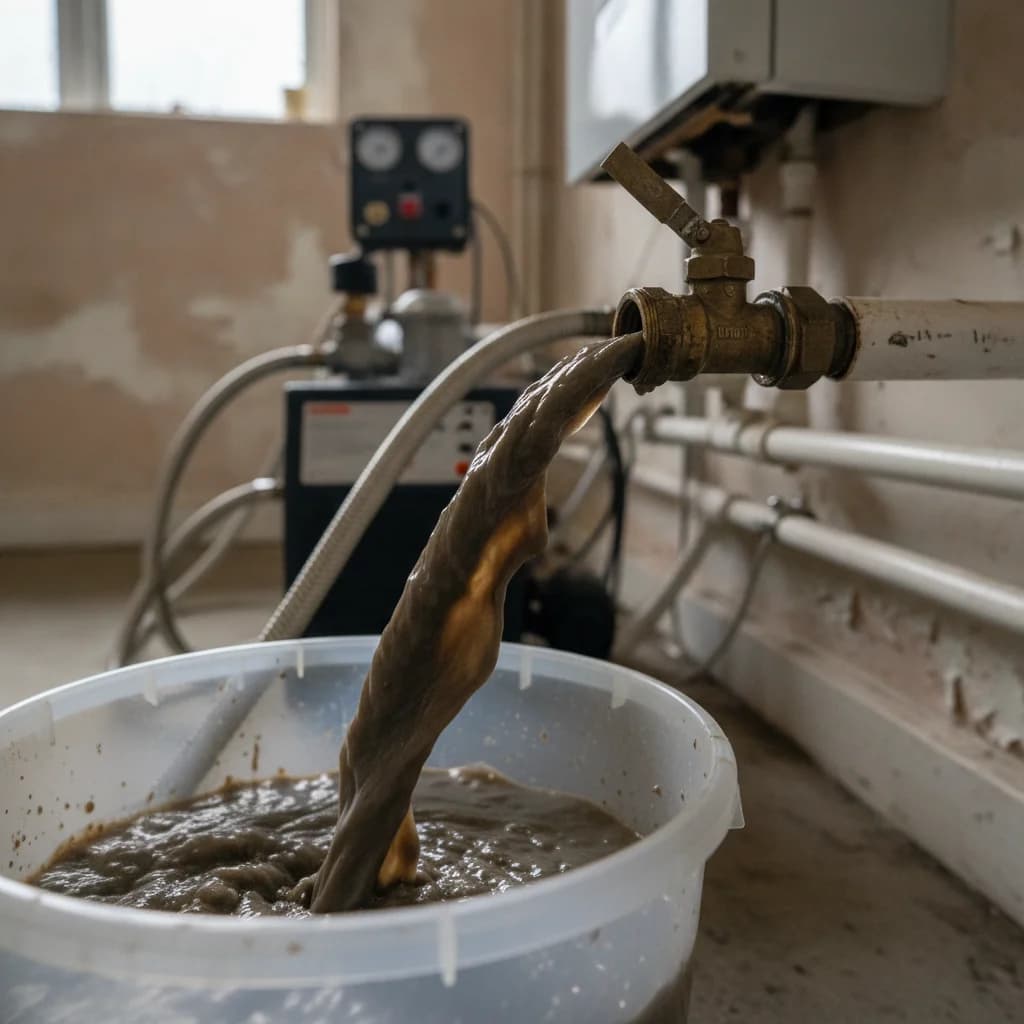
Over years of use, central heating systems accumulate rust, sludge and mineral debris. This build-up settles at the bottom of radiators and clogs pipework, forcing your boiler to work harder to heat your home.
Common Signs You Need a Power Flush
- Radiators that are cold at the bottom but warm at the top.
- Some radiators heating up while others stay cold, even with the system balanced.
- Discoloured (black or brown) water when you bleed a radiator.
- Banging, gurgling or knocking noises from the boiler or pipework.
- Rising heating bills without a change in usage.
What a Power Flush Involves
A power flush uses a powerful pump to push a cleaning chemical mixed with water through your entire heating system at high velocity and low pressure, dislodging built-up sludge and debris without damaging pipework. Once flushed, a corrosion inhibitor is added to protect the system going forward.
Why It's Worth Doing
- Restores even heat across every radiator in the property.
- Improves boiler efficiency, which can reduce your gas bill.
- Extends the working life of your boiler and radiators.
- Often required to validate a new boiler's warranty if the old system was neglected.
If your radiators aren't heating evenly or your system sounds noisier than it used to, a power flush is usually a far cheaper fix than a full boiler replacement.
Need help with this?
View our Power Flushing serviceNeed a hand with a plumbing or heating issue?
020 3633 2827